

“A brilliant jewel in the black velvet sky.”
— Buzz Aldrin
The first time I saw this image in Mariwave, it gave me chills. We’ve all seen satellite imagery, weather maps and digital globes, but this felt different. The atmosphere, moving weather, locations and human references occupied the same continuous world. What normally reaches us as separate information appeared, for a moment, as relationships. I felt Earth’s fragility and interconnectedness at once.
Astronauts describe a far more profound shift when looking back at Earth: the recognition of a single, vulnerable world where the divisions organizing life on the surface become less apparent. Mariwave’s goal is to help us step back from the fragments long enough to examine the whole.
The integration with Radio Browser, a community-built directory of internet radio stations, adds another way to explore: through sound. You can look at a place and listen to its music, voices and local broadcasts. It gives the globe a more organic feel—people going about their day, speaking their languages and sharing what matters to them. A place becomes somewhere you can spend a little time, as well as somewhere you can examine.
The Atmosphere Is Continuous. Our Information Is Not.
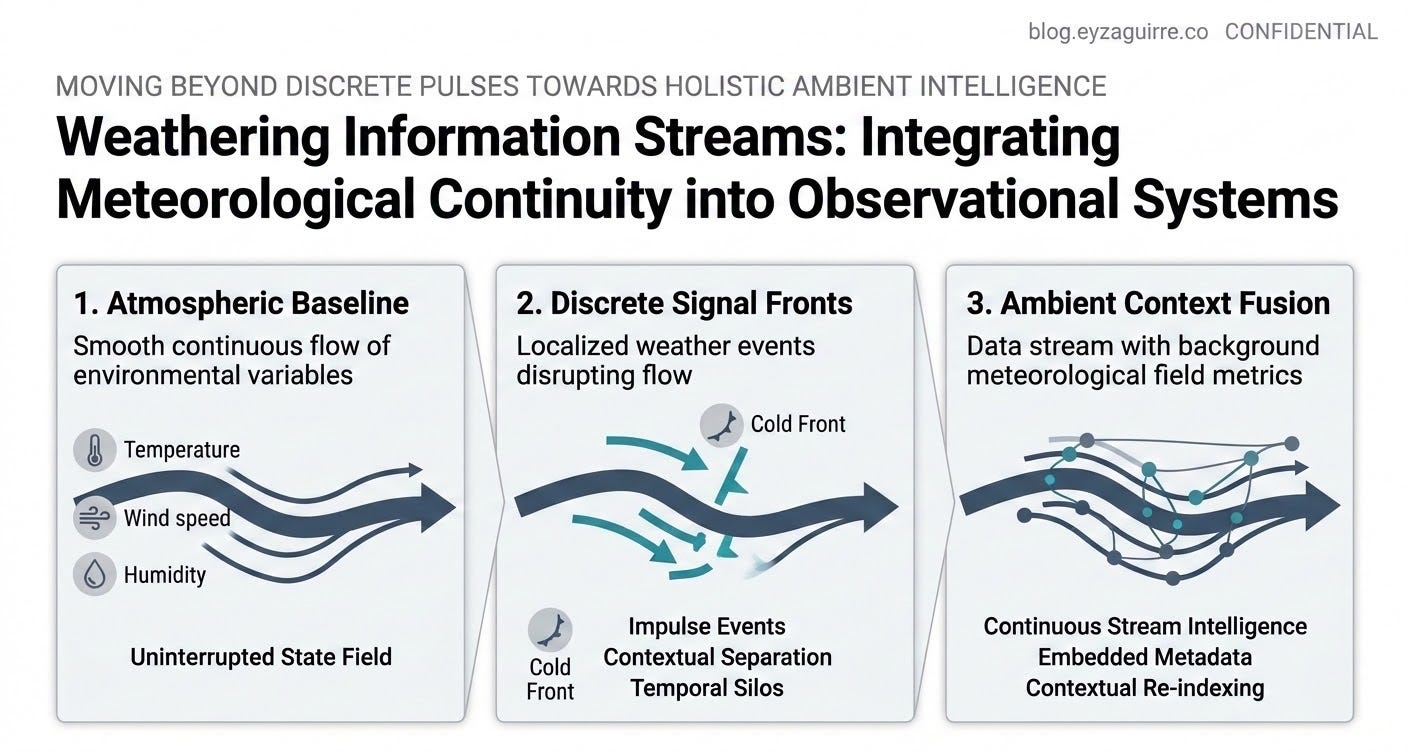
A pressure reading alone does not explain the weather. Its significance depends on surrounding conditions, changing patterns and the observations supporting it. A map matters not because it contains more numbers than a paragraph, but because it makes relationships available for inspection.
Looking at the globe, I thought about how rarely our information environment affords that continuity. We receive a storm as a weather story, an interruption as a business story, a policy decision as politics and a local consequence as human interest. Those distinctions serve legitimate editorial purposes, but they can become intellectual boundaries. Categories of delivery begin to stand in for the structure of the world.
Much of the reporting serious understanding depends on is careful, specialized and indispensable. The difficulty arises between reports: missing context, connections we must reconstruct and attention repeatedly reset as one item replaces another. We can become well informed about the pieces while remaining poorly equipped to examine their relationships.
Advertising and short-form delivery compound this difficulty. It contributes to an experience where continuity belongs to the advertiser rather than the reader’s inquiry.
A Place to Assemble the Picture
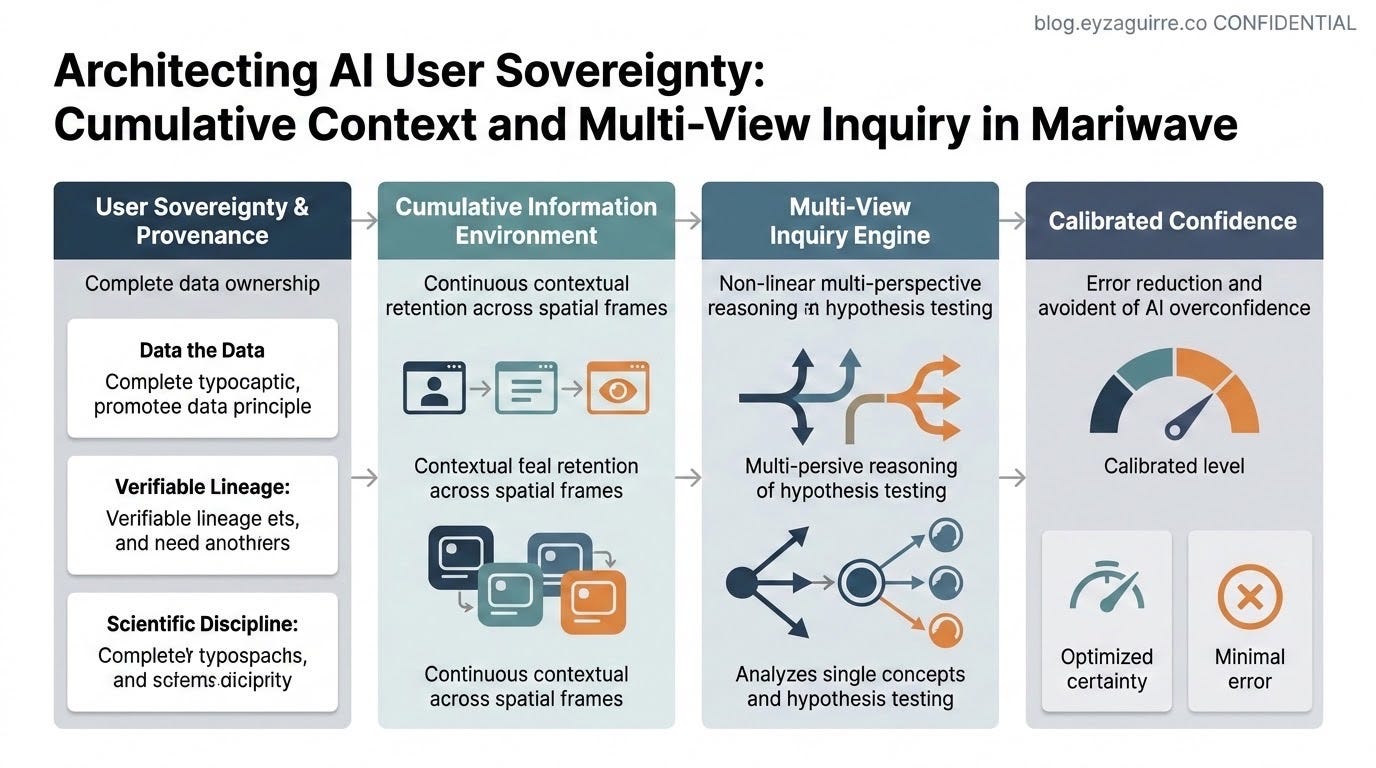
Mariwave gives you a workspace where you can keep exploring a question and build on what you find. The globe brings information together by place, so you can see how different layers relate. You’ll be able to add your own layers and follow the questions that interest you.
A coastal resident, researcher, teacher and business owner might look at the same region for different reasons. Each needs a way to choose relevant information, compare sources and test an explanation.
That also means checking the data. Layers may cover different dates, leave out places or rely on uncertain measurements. Seeing them together can suggest a connection worth investigating. Checking their sources helps establish whether that connection holds.
The goal is to help people see what the evidence shows, where the gaps are and when a conclusion needs to change.
Keeping Control of Your Work
In “Underwriting the Future of AI” and “The Memory We Refuse to Own,” I explored who controls the computers running our AI and the record of our work with it. Those choices shape what we can keep, revisit and continue on our own terms.
Mariwave brings those concerns into the workspace. You choose which models to use and which files to share. Each chat runs in its own virtual computer on your Mac, with internet access off until you allow it and only the files you add.
Local and cloud models are available in the same app. Choosing a cloud model means deciding what information to send to an outside service. Keeping a task local gives you a different boundary. Either way, you still need to review what the AI produces.
Your Questions, Your Layers
The globe gives you something to explore. The workspace gives you choices about how to explore it.
Adding your own layers connects the two. You can bring in material relevant to your work, compare it with other sources and investigate something the original view’s creators may never have considered.
Expertise and trusted reporting help that process. You can follow their sources, compare explanations and return to the evidence as your questions develop.
AI for the Rest of Us
These choices need to be straightforward. People should be able to choose a model, understand what it can access and get to work. Mariwave installs like a Mac app and requires no terminal setup. Early access begins with a small group using Apple silicon Macs; the evaluation build is for sample, test or non-sensitive data.
Our aim is to make that control useful to more people: clear choices, understandable limits and room to work with their own material.
Returning to Earth
What gave me chills was seeing weather, geography and people’s lives in the same picture. Connections became easier to see, and I wanted to look closer.
That’s the “astronaut moment for all” I want to share: a chance to see Earth as a whole and explore the details that matter to you.
The view was made with Mariwave. You’ll be able to add your own layers and pursue your own questions. Visit mariwave.com to request early access for macOS.
Alan Eyzaguirre is a Silicon Valley corporate strategist, product manager, and AI engineer. He’s the founder of https://mariwave.com.